Rabbits are beloved pets known for their playful nature and distinctive diet. As rabbit owners, it’s crucial to understand what foods are safe and beneficial for our furry friends. Rabbits mostly eat hay, though they also enjoy a variety of fresh vegetables in small quantities. Additionally, they have a taste for various seeds, such as corn, millet, nyjer, flax, sunflower, etc.
Sunflower seeds can serve as a delightful treat for your rabbit, offering a range of vitamins, minerals, and beneficial nutrients that are good for their well-being. Nevertheless, it’s important to remember that no seeds, including sunflower seeds, provide a complete nutritional profile for rabbits. Therefore, these should be offered as occasional treats and not as a staple in their diet.
In this guide, we delve into the topic of sunflower seeds and leaves and their place in a rabbit’s diet. If you want to know more about sunflower seeds you can feed your rabbit, including which nutrients they offer, how many sunflower seeds you should give your pet, and more, read on.
Table of Contents
Can Rabbits Eat Sunflower Seeds?
Sunflower seeds are high in fat and should be given in moderation. While they can be a source of vitamins and minerals, the high-fat content poses a risk of obesity and digestive issues in rabbits. Many rabbit experts recommend that between 5 and 10 sunflower seeds be given to your rabbit per week, which is admittedly a tiny amount. If you choose to feed your rabbit sunflower seeds, do so sparingly and watch for any adverse reactions.
What Nutritional Benefits Do Sunflower Seeds Offer to Rabbits?
While sunflower seeds are not a comprehensive dietary solution, they offer a range of nutrients beneficial to your rabbit’s health. Black Oil Sunflower Seeds (BOSS) are particularly recommended for rabbits, and they provide the following nutritional components:
- Dietary Fiber
- Healthy Fats
- Protein
- Calcium
- Vitamin B Complex
- Iron
- Vitamin E
- Potassium
- Vitamin A
Which Type of Sunflower Seed is Best for Rabbits?
There are two types of sunflower seeds: Black Oil Sunflower Seeds (BOSS) and Regular Sunflower Seeds. The best sunflower seeds for rabbits are Black Oil Sunflower Seeds. Regular sunflower seeds are less nutritional but aren’t toxic for your rabbit. They can thus be given to your fluffy pets in a pinch. It’s simply that black oil sunflower seeds offer much more nutrients.
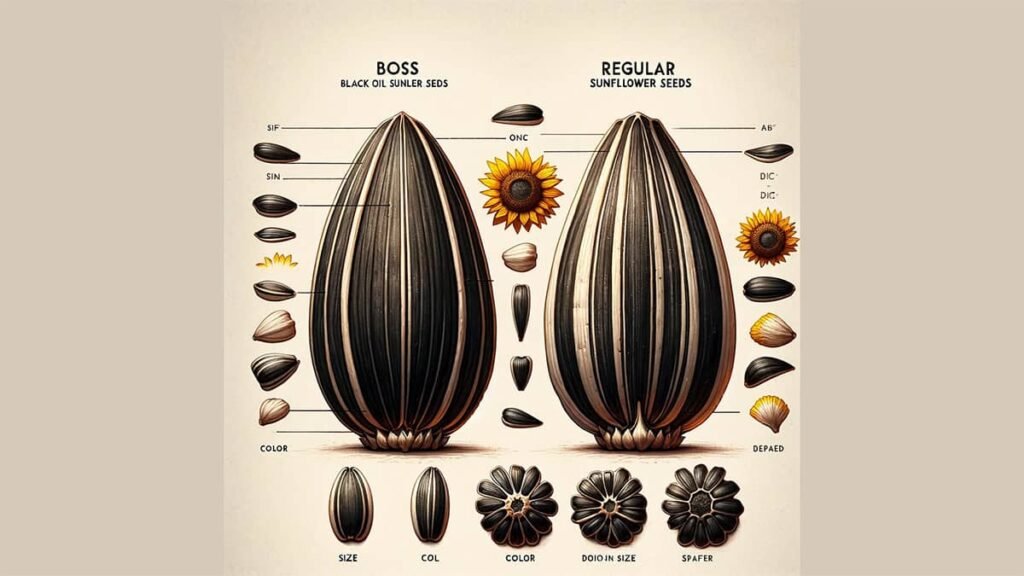
Black Oil Sunflower Seeds (BOSS) Vs. Regular Sunflower Seeds
Here’s a comparison of Black Oil Sunflower Seeds (BOSS) and Regular Sunflower Seeds in a tabular format:
| Feature | Black Oil Sunflower Seeds (BOSS) | Regular Sunflower Seeds |
|---|---|---|
| Oil Content | Higher oil content, making them more energy-dense. | Lower oil content compared to BOSS. |
| Seed Size | Slightly lower in calories and fat but still nutritious. | Larger with thicker hulls, harder to crack. |
| Nutritional Value | Slightly lower in calories and fat but still nutritious. | Slightly lower in calories and fat, but still nutritious. |
| Usage | Often preferred for bird feeding, especially in colder weather. | Commonly used for human consumption, either raw or roasted. |
| Shelf Life | Longer shelf life due to higher oil content. | Shorter shelf life due to lower oil content and thicker shells. |
| Price | Generally more expensive due to higher oil content and demand. | Usually less expensive, widely available in food stores. |
| Accessibility for Animals | Easier for smaller birds and animals to eat due to thinner shells. | Harder shells can be more difficult for some animals to consume. |
| Taste and Texture | Richer and oilier taste, softer texture. | Nuttier flavor, more crunchy texture. |
Benefits of Sunflower Seeds for Rabbits
Sunflower seeds, especially when given in moderation, can offer several benefits to rabbits. These benefits stem from the nutrients contained in the seeds:
- Healthy Fats: Sunflower seeds are a good source of essential fatty acids, which are important for maintaining healthy skin and fur in rabbits.
- Protein: They provide moderate protein, vital for overall muscle tissue growth and maintenance.
- Vitamin E: This is a powerful antioxidant found in sunflower seeds. It helps support immune health and protect body cells from damage.
- Fiber: Essential for digestive health, sunflower seeds fiber can help maintain regular bowel movements and prevent digestive disorders.
- Vitamin B Complex: These vitamins affect energy metabolism, nerve function, and overall well-being.
- Iron: Important for blood health; iron in sunflower seeds helps prevent anemia and support healthy circulation.
- Calcium: Essential for bone health and teeth strength, which is particularly important for rabbits as they constantly need to manage tooth growth.
- Potassium: This mineral is crucial for heart health and the proper functioning of the muscles and nerves.
- Vitamin A: Important for vision, immune function, and skin health.
It’s important to note that while sunflower seeds offer these benefits, they should only be a small part of a rabbit’s diet due to their high fat content. Overfeeding can lead to obesity and other health issues in rabbits. As with any treat or dietary supplement, moderation is key.
How to Feed Sunflower Seeds to Rabbit?
Sunflower seeds are small and encased in a hard shell that, although not poisonous, is inedible and should be discarded. The method of presenting sunflower seeds to rabbits is a topic of debate. Some believe that rabbits can effortlessly and safely shell the sunflower seeds themselves. On the other hand, opinions suggest that it’s better to remove the shell before offering the seeds to rabbits for safety reasons.
An important consideration when choosing to feed your rabbit sunflower seeds with the shell is to ensure they are unsalted. Rabbits generally do not require added salt in their diet, and excessive salt can lead to dehydration.
What’s the Ideal Season for Feeding Sunflower Seeds to Rabbits?
The timing of when you feed sunflower seeds to your rabbit can be more significant than you might realize, even if you only offer a small number of seeds weekly. Due to their high-fat content, you should feed sunflower seeds to your rabbit during winter. The extra fat helps maintain your rabbit’s warmth and promotes a thicker, sleeker coat. Conversely, offering sunflower seeds in the summer could lead to overheating as it may result in an excessively thick coat.
Can Rabbits Eat Sunflower Leaves?
Sunflower leaves can be a healthier option compared to seeds. They are lower in fat and contain various nutrients beneficial to rabbits. However, they should still be introduced slowly into their diet. Before offering them to your rabbit, ensure the leaves are free from pesticides and other chemicals.
The Risks of Feeding Sunflower Products to Rabbits
Overfeeding sunflower products can lead to health issues such as gastrointestinal problems and obesity. Monitor your rabbit’s reaction to these new foods and consult a vet if you notice any signs of distress.
Best Practices for Feeding Sunflower Seeds and Leaves to Rabbits
When introducing sunflower seeds or leaves, start with small quantities. Gradually increase the amount based on how your rabbit responds. Always prioritize hay and other staple foods in their diet.
Alternatives to Sunflower Seeds and Leaves
There are many safe and nutritious alternatives to sunflower products. Carrots, apples, and leafy greens like romaine lettuce and spinach can be great choices. These provide essential nutrients without the high-fat content of sunflower seeds.
What Seeds Should You Never Feed to Rabbits?
Although many seeds are safe for rabbits, some are toxic to rabbits and should be avoided. Many of these dangerous seeds and pits are found in fruits and are particularly harmful because of their high cyanide levels. The seeds you should never feed to your rabbit include:
- Apple Seeds: Contain cyanogenic glycosides, which can release cyanide when digested.
- Apricot Pits: Like apple seeds, these contain substances that can be converted into cyanide.
- Cherry Pits: Contains cyanide and can be hazardous if chewed or broken by rabbits.
- Mango Seeds: Large, potentially a choking hazard, and possible toxic compounds.
- Peach Pits: Like apricot and cherry pits, they contain cyanogenic compounds.
- Pear Seeds: Contain trace amounts of cyanide.
- Plum Pits: Also contain cyanide and are dangerous if ingested.
It’s always best to err on the side of caution and avoid feeding these seeds to rabbits. When offering fruits, ensure they are properly cleaned and free of seeds or pits.
FAQs – Frequently Asked Questions
How often can I feed my rabbit sunflower seeds?
Sunflower seeds should be an occasional treat, not a regular part of their diet.
Are sunflower leaves better for my rabbit than the seeds?
Generally, yes. Sunflower leaves are lower in fat and can be a healthier choice.
What should I do if my rabbit has an adverse reaction to sunflower seeds or leaves?
Discontinue feeding them these items and consult a veterinarian.
Can baby rabbits eat sunflower seeds and leaves?
It’s best to avoid these for baby rabbits and stick to a more traditional diet.
Conclusion
In addressing the question of whether rabbits can eat sunflower seeds, it’s clear that they can, but it’s crucial to practice moderation. The general recommendation from veterinarians and rabbit experts is to limit sunflower seed consumption to no more than 10 seeds per week. This amount may seem small, but preventing digestive issues and blockages in your pet is important. Also, the extra fat found in sunflower seeds is typically only necessary for rabbits during winter.
Sunflower seeds are non-toxic and offer a variety of essential nutrients, including vital fiber, which is beneficial for rabbits. While feeding these seeds with their shells on is safe, some veterinarians advise removing them to reduce the risk of blockages and choking hazards. Always prioritize a balanced diet and consult with a vet for personalized advice.
We encourage you to consult your veterinarian for advice tailored to your rabbit’s needs. Share your experiences or questions in the comments below to join our community of responsible rabbit owners.