I’ve been asked a lot about axolotl gill development and whether it’s determined by genetics or the environment. The truth is, it’s a combination of both. However, a concerning misconception is circulating that axolotl fluffy gills indicate low oxygen levels. This is not the case; fluffy gills or healthy-looking gills are not a response to poor water quality.
Gill development is indeed influenced by genetics, determining the potential size and density of the gills, but environmental factors like water quality and diet also play a significant role.
Table of Contents

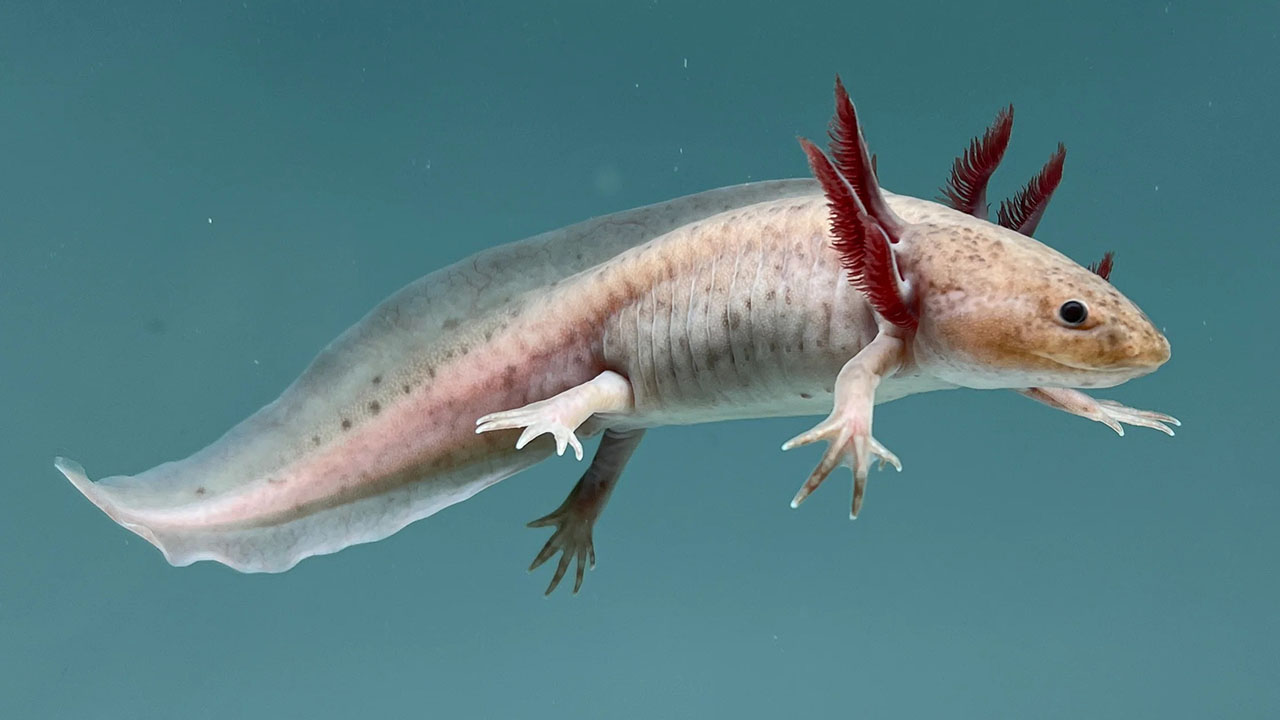
Take mosaic axolotls as an example: their gill differences clearly illustrate the genetic influence. Mosaics, especially those with “split” characteristics, may have distinctly different gills on each side of their body, unrelated to environmental conditions. For instance, an axolotl shown above shows a marked difference in gill size from one side to the other, purely due to genetics.
Functions of Gill Filaments in Axolotls
The primary function of the gill filaments in axolotls is to exchange gases; oxygen is absorbed and picked up by red blood cells, and carbon dioxide is released into the surrounding water. The larger the gill surface area the axolotl has – in other words, the fuller and fluffier the gill filaments are – the more efficiently these gases can be exchanged between the axolotl’s body and the surrounding water.
The axolotl regulates this exchange by varying blood flow through the gills, akin to how humans breathe faster or slower.
However, gill filaments can also absorb and release other gases. Ammonia and chlorine, for example, are exchanged across the filament membranes. Both ammonia and chlorine are toxic to axolotls – even at relatively low levels. The chlorine gas used to sterilize our drinking water is lethal to an axolotl placed in untreated tap water. Urban water supplies are often so chlorinated that the untreated tap water can kill an axolotl in a matter of minutes.
Ammonia is naturally produced as a waste product in the tissue of an axolotl. It has to be released to prevent buildup in the animal’s bloodstream. It can only be released through the gills and skin, however, if the concentration of ammonia in the water is lower than the concentration in the animal’s blood.
More precisely, the pH of the water has to be lower than the pH of the animal’s blood. That is because ammonia reacts with water to form ammonium hydroxide, and ammonium hydroxide increases the pH. Ammonium hydroxide is a base, like the lye in drain cleaners used to burn hair out of a clogged drain. It damages unprotected tissue in the same way lye burns through hair.
Ammonia is also produced as bacteria break down fecal material and rotting food in the water. This is why it is essential to remove uneaten food and waste. Invest in a good turkey baster to make this easier. Bacteria act more quickly at higher temperatures; the cooler the water, the better.
If the axolot is constantly exposed to high pH, two things will happen to the gill filaments; (1) the ammonium hydroxide in the water will burn the filaments, and (2) the animal’s body will respond by reducing the growth of gill filaments to reduce the surface area available to absorb more ammonia. In other words, the gills lose their fluff and then fail to regrow it.

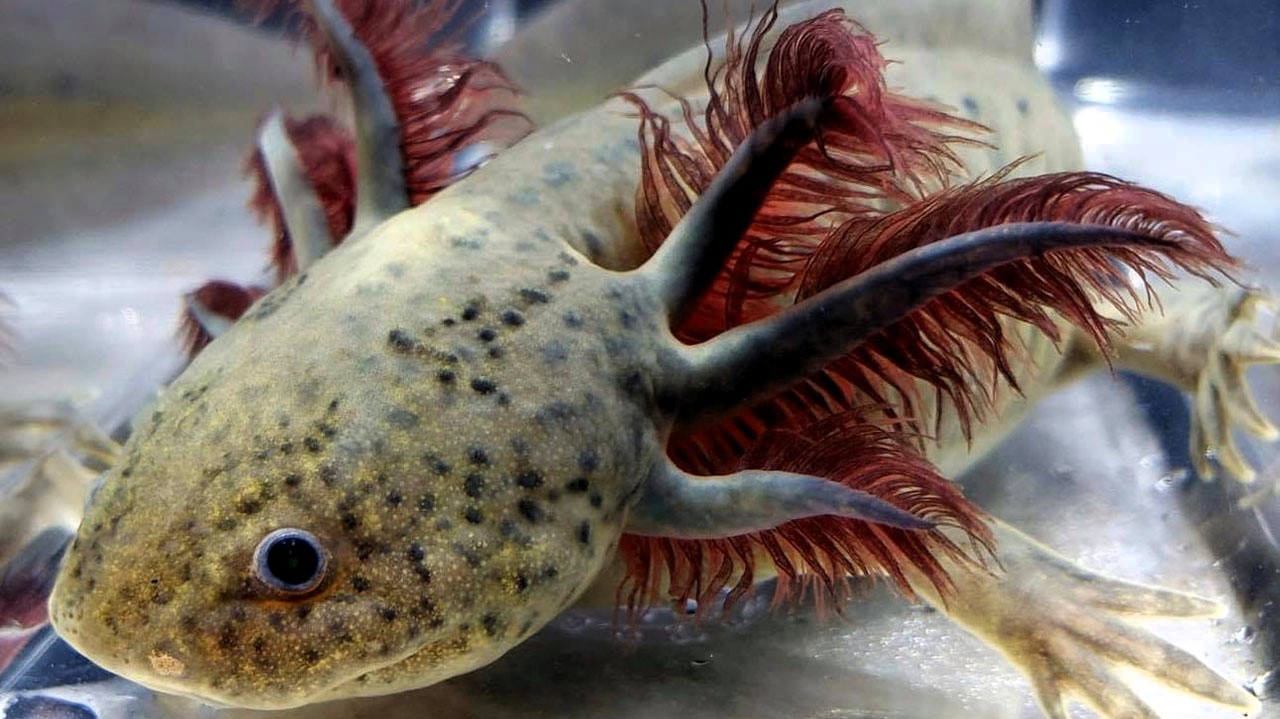
If the poor water quality condition continues, the axolotl gill stalks may also begin to shrink, further reducing the surface area of the gills. The axolotl in this pic (a light copper with GFP) was exposed for several days to high ammonia levels, losing almost all of its gill filaments.
Once the gills lose most of their fluff, the axolotl’s ability to exchange oxygen and carbon dioxide is greatly diminished. As long as it holds very still, keeping its oxygen demand low, it can survive under these conditions, but if it gets stressed or suddenly has to move quickly, it’s in trouble.
However, poor water quality, particularly high ammonia levels or a pH above 8, can damage gills, leading to reduced “fluff” and impaired gas exchange. Just like lungs in humans, axolotls’ gills need sufficient surface area for effective breathing.
Axolotl Care: 3 Key Tips for Healthy, Fluffy Gill Maintenance
An adult axolot with no gills at all can still survive – but it won’t be having a good time. Axolotls, like all amphibians, can absorb oxygen and release carbon dioxide directly through their skin. Unfortunately, there is not enough surface area on the skin alone for them to get all of the oxygen they need to stay healthy and active. If you want axolotls with full, fluffy gills, you have to meet these three conditions:
- Keep the water cool, clean, and clear. I do not mean that your tank should look like a sterile bath – algae isn’t “dirt”, for example. Just don’t allow leftover food to remain in the tank for more than 24 hours, and make sure your filter system is working properly.
- Feed relatively high-protein foods. Earthworms, blackworms, and other “whole” live foods are excellent. Just like human children, an axolotl cannot reach its full potential – regardless of its genetic background – if it doesn’t have enough protein in its diet.
- Choose animals with a good genetic background. Babies with long, fluffy gills do not always become adults with long, fluffy gills. Gills will naturally change size as the animal grows due to changing oxygen requirements. If possible, look at the parents and older siblings before choosing your pet.
The image below shows the same GFP Leucistic Axolotl at 4 months and at one year old.

Conclusion
Healthy gill maintenance is key for axolotls. To ensure fluffy, functional gills, maintain cool, clean water, provide a high-protein diet, and choose axolotls with good genetic backgrounds. Remember, while axolotls can technically survive with minimal gills, they thrive best with well-maintained, fluffy gills, indicative of a healthy environment and proper care.